
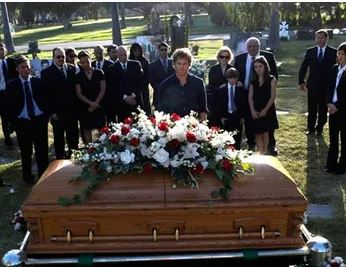
Batman’s parents were murdered. Hamlet’s father, too.
Dorothy Gale lost her home.
Scarlett O’Hara fell from high society and privilege.
Those are perfect examples of writing about grief and loss.
In addition, they deliver characters who want to make sense of the world. Their reactions to losses drive them—whether the losses happened before the story starts or along the way.
Readers absolutely want upheaval. They want adversity. Your protagonist can’t smoothly climb a mountain. Ropes must break. Winds must howl. Fellow climbers might perish. Or maybe there was a murder on the mountain. Rivals fighting to get to the top.
And your main characters must process as they go. They process life, death, and change. Challenged in the face of crisis.
Readers want their main characters tested to see how they grapple with horrible things, the worst moments. Strangely enough, readers compare and contrast a character’s pickles and dilemmas with their own.
Your character’s internal system
Your character’s central nervous system becomes a kind of vintage switchboard, with thick foam wires and old-fashioned plugs. If the circuitry isn’t properly equipped, an excess of emotional information causes the system to overload, the circuit breaks, the board runs dark. That is shock .
Life is full of unfairness. And sometimes we create our own misery. We conjure illusions about who we are. We tell stories and try to fool others. Pride and greed are powerful forces. And then, shame. The downfall. The come-uppance. The atonement. Weave that into a story 😊.
 As a writer of fiction, I constantly wonder how I can use other people’s trauma in my writing.
- How does Sam Bankman-Fried get through the day, knowing his customers are out billions?
- What was it like for Elizabeth Holmes to apologize, so profusely, in court?
- Is Alec Baldwin thinking about fate?
There is hardship when dealing with what life hands us. Or what we hand ourselves. Some of the worst wounds are self-inflicted. Shame and embarrassment are powerful drivers. How far will we go to protect the story we’ve been telling family, coworkers, customers, the world, ourselves? How far will we go to uphold the image we’ve concocted?
I am fascinated by the movie Fearless, based on the real-life airplane crash in Iowa in 1989 when 112 people died and 184 survived. Years later, I met a woman whose niece survived that crash. The niece walked out of the cornfield and got on another plane that same day to finish her trip to Chicago. (That’s fearless!)
Everyone deals differently with what life hands us. Think about how they react, how they carry themselves through life. H0 much do we rely on others? Do we pretend that ‘thing’ didn’t happen? How do we atone for a devastating accident? How does such a moment challenge our moral framework, our view of the world, ourselves?
Then, of course, when the grieving for what’s lost is over, we want our main characters to test the limits of what they thought was possible and, maybe, redefine themselves.
You might think your pain and your heartbreak are unprecedented in the history of the world, but then you read. Books are the teachers of things that torment people the most, the very things that connect them with all the people who were alive, or who had ever been alive.
We are not alone—not castaways in the dark and cold.
As writers, we launch tens of thousands of characters out into the world to grapple with life’s random ills and miseries. Readers, eager to share in the journeys and challenges, say thanks. My response is this, “You are welcome.”
Unleash the novel inside you
with compelling characters,
intricate worlds,
and fine-tuned prose.
“Linda has published numerous books. She blogs about the publishing world, posts useful tips on the challenges a writer faces, including marketing and promoting your work, how to build your online platform, how to get reviews and how to self-publish. She has mentored many authors and edited their work.”
#selfpublish #author #success #wordsmith #motivation #marketing #authorlife #creativity #motivation #career