
A trope is a figurative or metaphorical use of a word or expression; a literary term that, broadly stated, is a repetitive element like a theme or motif.
For example ‘Stop and smell the roses.’ Another is ‘get rich quick scheme’.
The more common understanding of the word trope is as a literary concept meaning the repetitive use of a word, plot device, theme, image, or figure by an author. The “ticking clock” is a common trope of screenwriting. More recently they do not have a clock and instead use the term ‘tic, tic, tic’ or ‘tick-tock’.
Now, there’s nothing wrong with most tropes in any genre. A few can definitely be problematic, but many are useful because they help set expectations for readers. And writers who are trope-aware can subvert those tropes judiciously to great psychological impact. Or just lean into the tropes, knowing that readers love them.
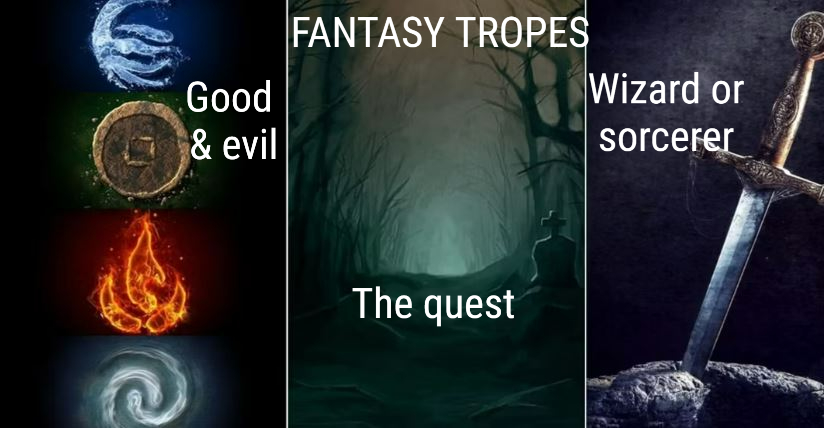
Some of the common tropes found in fantasy storytelling, including magic , fantastical creatures, or just basic good vs. evil yarn, the story had a happy ending after an epic struggle. In ancient times, nature was categorized into the four elements of air, earth, fire, and water. The powers balance out when paired against another.
Examples of fantasy tropes
- Ancient (or medieval) setting. Most of the time people picture medieval Europe with lords, ladies, castles, and dragons.
- Taverns. Taverns that offer room, board, and possibly entertainment (and mysterious new characters and plot twists).
- Good vs. evil. Characters caught in the middle, who are usually the ones readers care the most about, are different shades of both.
- Evil wizard, witch, or sorcerer. An evil practitioner of magic “forbidden magic” who uses it to cause chaos and gain power.
- Good wizard, witch, or sorcerer. It’s very common to counter an evil magic maker with a good magic maker.
- Fantasy. In fantasy there is often a “chosen person” who will either unite the word or destroy it.
- Reluctant hero. Many of them end up rising to the occasion (when it matters most).
- The quest. The quest may take different forms (save a captive person, find treasure, slay a dragon, battle an army, etc.), but the quest is often the reason people in a fantasy get moving in the first place.
- Ancient (and powerful) artifacts. A special sword that the greatest heroes of legend used in battle or a legendary wand that amplifies magic in ways that sorcerers could only dream.
- Knowledge is power. Libraries are special places, whether they’re institutional libraries or personal libraries (for those privileged enough to have one). It can be used for good or evil.
- Fantastical creatures. Some of the creatures may be good, others bad, and many unaffiliated: dragons, elves, dwarves, trolls, goblins, giant spiders, orcs. Be creative.
- Hidden truth or inheritance. One possibility is that there is a secret heir to the throne of a kingdom.
- Damsels in distress. This trope is starting to fade away.
- Orphan hero. So many fantasy stories have a main protagonist who is an orphan (or learns they were orphaned or thinks they were orphaned).
- Heroes. Characters prove themselves to be the best warrior ever; the most evil warlock ever; the strongest sorcerer ever; the greatest horse rider ever; the best archer; the most amazing blacksmith; the most fearless ship captain.
- Price for winning. The protagonists may win, but there is a price for winning. They become extremely weakened. They sacrifice their future plans and/or their life. The character may win, everyone may be happy, but there was a price to be paid by the protagonist.
Unleash the novel inside you
with compelling characters,
intricate worlds,
and fine-tuned prose.
“Linda has published twenty books. She blogs about the publishing world, posts useful tips on the challenges a writer faces, including marketing and promoting your work, how to build your online platform, how to get reviews and how to self-publish. She has mentored many authors and edited their work.”
#selfpublish #author #success #wordsmith #motivation #marketing #authorlife #creativity #motivation #career