

Managing stress is an ancient drive within humans. In fact, the earliest forms of religion, philosophy, and myth all came together to serve the purpose of alleviating the anxiety associated with the human condition. From minor challenges to major crises, stress is part of life. Although you can’t always control your circumstances, you can control how you respond to them.
Preventing and managing long-term stress can lower your risk for other conditions — like heart disease, obesity, high blood pressure, and depression.
Ways to lower stress and become mentally and physically resilient:
- Listen to your body. Our bodies react to stress in a variety of ways: rapid heartbeat, tension headaches, clenched teeth, nausea, irritability, and more. When you feel these physical symptoms, take steps to correct them.
- Give meditation a try. Meditation can help to relax your mind and body at the same time, as well as improve your sense of peace, balance, and control. It also helps to keep you from feeling overwhelmed.
- Harness the healing power of music. A little calming background music can go a long way toward changing your mood and even your perspective on a stressful situation. Choose music artists and genres that promote relaxation and concentration without intruding on your thought patterns.
- Get plenty of exercise. Ensuring that you get some form of exercise at least 5 days per week for at least 30 minutes at a time can have enormous health benefits. Exercise reduces anxiety, lowers blood pressure, strengthens the body, and increases your lung capacity.
- Stress relief with laughter. Whether you’re guffawing at a sitcom on TV or quietly giggling at a newspaper cartoon, laughing does you good. Laughter is a great form of stress relief, and that’s no joke.
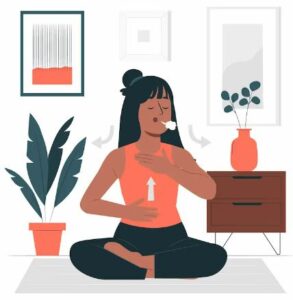 Relaxed breathing is a fundamental, life-sustaining function.
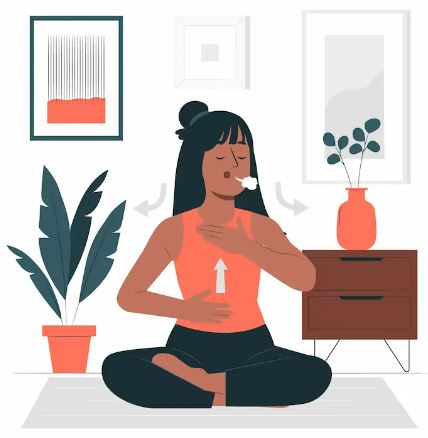
Breathing fuels the brain, and the entire body. How we breathe is just as important. Mindful breathing is another way to disrupt acute symptoms of stress and help your body receive nourishing oxygen. You can learn about various breathing exercises online, in books, or by taking a class. Some examples include deep, slow breathing, and counting seconds between breaths.
- cyclic sighing, which emphasizes prolonged exhalations;
- box breathing, which is defined by the equal duration of inhalations, breath holds, and exhalations; and
- cyclic hyperventilation, with longer inhalations and shorter exhalations.
Go ahead and give it a try. Smile. Turn the corners of your mouth up into a smile then give a laugh, even if it feels a little forced. Once you’ve had your chuckle, take stock of how you’re feeling.
Unleash the novel inside you
with compelling characters,
intricate worlds,
and fine-tuned prose.
“Linda has published numerous books. She blogs about the publishing world, posts useful tips on the challenges a writer faces, including marketing and promoting your work, how to build your online platform, how to get reviews and how to self-publish. She has mentored many authors and edited their work.”
#selfpublish #author #success #wordsmith #motivation #marketing #authorlife #creativity #motivation #career